
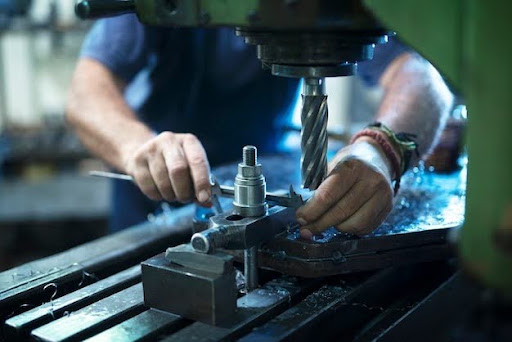
Gears are essential components in many industrial machines because they transfer power, control speed, and support accurate movement. Producing high-quality gears requires several carefully controlled processes to achieve the required dimensions, tooth profiles, strength, and surface finish. Precision gear manufacturing combines modern machinery, skilled production methods, and inspection techniques to create gears that can perform reliably in demanding industrial environments.
1. Design and Engineering
The process begins with detailed design and engineering. Manufacturers determine the gear type, dimensions, number of teeth, pressure angle, material, and required tolerances.
Computer-aided design software can help engineers develop accurate gear models and identify specifications before production begins. Careful planning at this stage helps ensure the finished gear meets the requirements of its intended application.
2. Material Selection
Selecting the right material is another important step. Common choices include various grades of steel, stainless steel, brass, and other engineering materials.
The material is selected according to factors such as load, operating speed, temperature, wear resistance, and environmental conditions. Precision gear manufacturing depends on using suitable materials because material quality can affect durability and long-term performance.
3. Gear Cutting
After the material is prepared, gear teeth are created through specialized cutting processes. Precision gear manufacturing often uses hobbing, which is widely used for producing many types of gears, while shaping and milling can be used for specific designs or production requirements.
These processes must be carefully controlled to maintain the correct tooth dimensions and spacing. Accurate cutting helps gears engage smoothly with their matching components.
4. Heat Treatment
Heat treatment can improve the mechanical properties of gear components. Processes such as carburizing, hardening, and tempering may be used to increase surface hardness while maintaining suitable internal strength.
Proper heat treatment can improve resistance to wear, fatigue, and repeated loads. The exact process depends on the material and performance requirements of the finished gear.
5. Gear Grinding and Finishing
Grinding and other finishing processes are often used when very accurate dimensions and smooth surfaces are required. Gear grinding can remove small imperfections left by earlier machining operations and improve tooth accuracy.
In precision gear manufacturing, finishing is particularly important for applications where gears operate at high speeds or require minimal vibration and noise.
6. Inspection and Quality Control
Inspection is performed throughout production and after the gear is finished. Manufacturers may measure tooth thickness, profile accuracy, runout, dimensions, hardness, and surface quality using specialized equipment.
Quality control helps identify defects and ensures that components meet specified tolerances. Consistent inspection is essential when gears are produced for critical industrial systems.
Final Thoughts
Precision gear manufacturing involves a series of connected processes, from initial design and material selection to cutting, heat treatment, finishing, and final inspection. Each stage contributes to the accuracy, strength, and reliability of the finished component. By using appropriate equipment and strict quality control, manufacturers can produce gears that deliver dependable performance across automotive, industrial, robotics, aerospace, and other demanding applications. Careful coordination between these stages helps reduce production errors and improve overall manufacturing efficiency.